


 русский
  Español
  Deutsch
Why Do Some Outdoor Leisure Chairs Feel Stable While Others Wobble
Outdoor seating often looks similar across catalogs, yet real-world performance can differ dramatically. One chair feels solid under shifting body weight, while another develops subtle rocking even on flat ground. This difference is rarely about appearance. It comes from structural engineering, joint precision, material control, and how forces travel through the frame during everyday use.
A reliable outdoor leisure products manufacturer does not treat stability as a single feature. It is a combination of load path design, fastening strategy, ground contact behavior, and long-term resistance to repeated stress cycles.
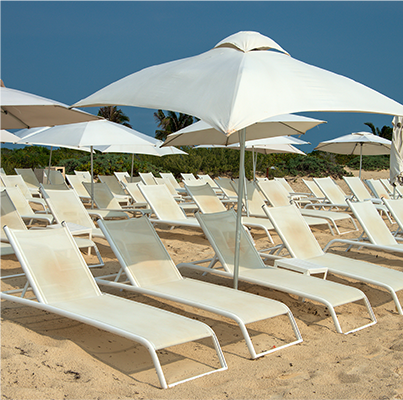
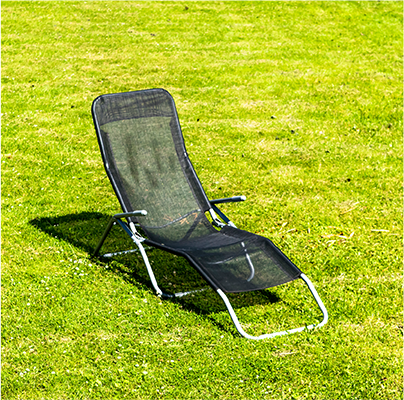
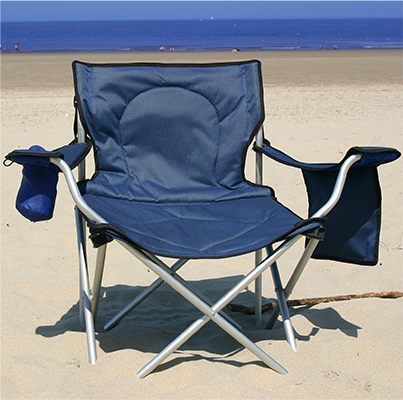
Frame Geometry Controls Perceived Stability
Stability begins with how the chair distributes force across its structure. Even small changes in leg angle or frame width can significantly affect balance.
- Wider stance legs reduce tipping tendency by increasing ground contact spread.
- Low center of gravity improves balance during side-to-side movement.
- Cross-bracing between legs strengthens lateral resistance under uneven loading.
Industry analysis of outdoor seating systems shows that structural geometry is often more influential than material thickness alone in preventing wobble during real use conditions.
Joint Design Determines Long-Term Rigidity
Most wobbling problems originate at connection points rather than the main frame tubes. Repeated sitting, leaning, and shifting generate micro-movements that gradually loosen joints over time.
- Welded joints distribute stress more evenly compared to single-point fasteners.
- Gusset reinforcement prevents angular deformation at high-stress intersections.
- Bolt-and-sleeve systems maintain tighter alignment under repeated vibration.
Research from outdoor furniture engineering sources shows that joint fatigue, not static load, is one of the primary causes of progressive instability in seating structures.
Why Some Chairs Develop Wobble Over Time
Even well-designed chairs can lose stability if exposed to repeated environmental and mechanical stress. Outdoor conditions amplify small structural weaknesses.
- Thermal expansion and contraction loosen fasteners across seasonal cycles.
- UV exposure weakens plastic connectors, reducing rigidity in attachment points.
- Repeated dynamic load shifts accelerate joint wear from side pressure and twisting motion.
Over time, these small movements accumulate, producing the familiar “rocking” sensation that users often describe as instability.
Material Choice Affects Stability Perception
Different materials respond differently under stress, even when frame design appears identical.
- Aluminum frames provide a strong stiffness-to-weight balance, reducing deformation under load.
- Steel frames increase rigidity but require corrosion protection to maintain joint integrity.
- Reinforced polymers reduce vibration transfer, improving perceived stability in lightweight designs.
A well-developed outdoor system is not defined by a single material, but by how multiple materials work together to control movement and stress distribution.
Ground Contact Is Often Overlooked
Even structurally sound chairs may feel unstable depending on the surface they rest on. Outdoor environments rarely offer perfectly level foundations.
- Uneven terrain creates uneven load distribution across chair legs.
- Worn or missing foot caps alter height balance, introducing tilt.
- Soft surfaces like sand or grass shift under pressure, amplifying movement.
Some designs integrate adjustable leveling feet or wider base pads to compensate for unpredictable ground conditions, reducing perceived wobble without changing frame structure.
Load Movement Matters More Than Static Strength
Many outdoor chairs are tested based on static load capacity, yet real usage involves continuous movement. Sitting down, leaning sideways, shifting posture, or turning the torso introduces dynamic forces.
- Side-to-side forces create frame racking, the main source of wobble.
- Forward leaning shifts center of gravity, stressing front legs.
- Repeated motion cycles loosen connection points gradually, even without visible damage.
This explains why two chairs with identical weight ratings can feel completely different in stability during actual use.
Manufacturing Precision Defines Stability Consistency
Production quality directly affects whether chairs remain stable over time. Small tolerances in welding, drilling, or assembly can create long-term structural differences.
- Accurate frame alignment ensures even load transfer across all legs.
- Consistent torque control in fasteners prevents early loosening.
- Quality inspection reduces micro-defects in weld joints that later expand under stress.
This is where an experienced outdoor leisure products manufacturer separates structural reliability from purely visual design. Stability is not a single component but the result of controlled production accuracy at every stage.
Outdoor chair stability is determined by more than material strength or weight capacity. Frame geometry, joint engineering, ground interaction, and manufacturing precision all work together to define how solid a chair feels during real use.
Products that wobble are not necessarily poorly designed in appearance—they often reveal weaknesses in load distribution, fastener behavior, or tolerance control. Stable outdoor seating comes from systems designed to manage movement, not just support weight, ensuring consistent performance across varied outdoor environments.

-
-
 TEL:
TEL:
- +86-13738961469
-
-
-
 EMAIL:
- cnds@cndsgm.com
-
-
-
 ADDRESS:
- Niubei Jincun, Baiyang Sub-district, Wuyi County, Jinhua City, Zhejiang Province, China
-
Outdoor Leisure Products Manufacturer

