

 русский
  Español
  Deutsch
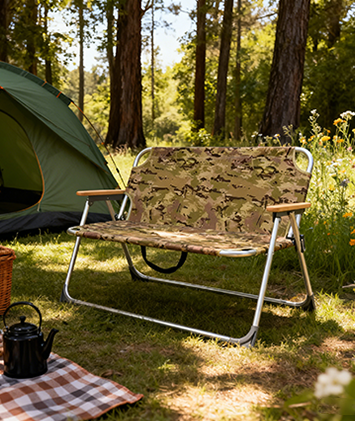
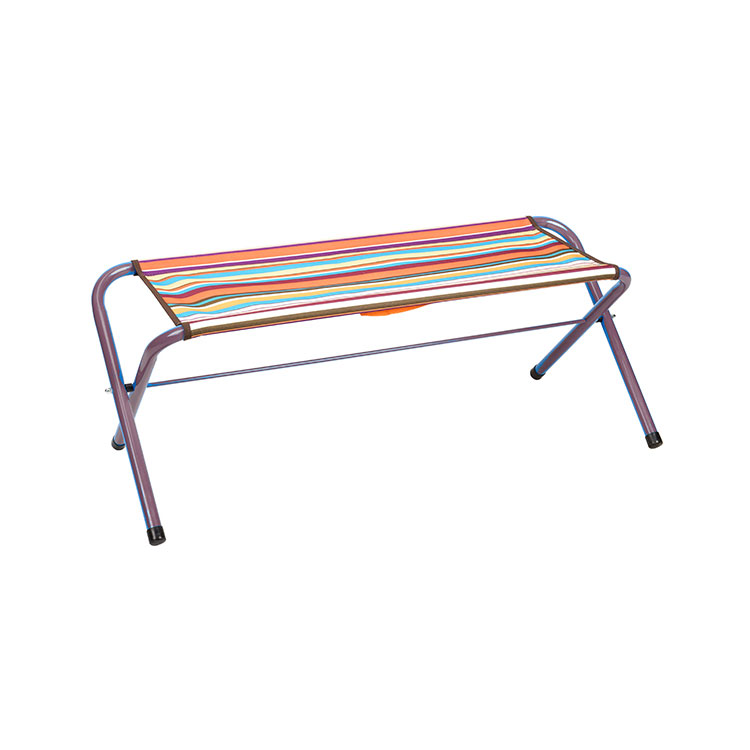
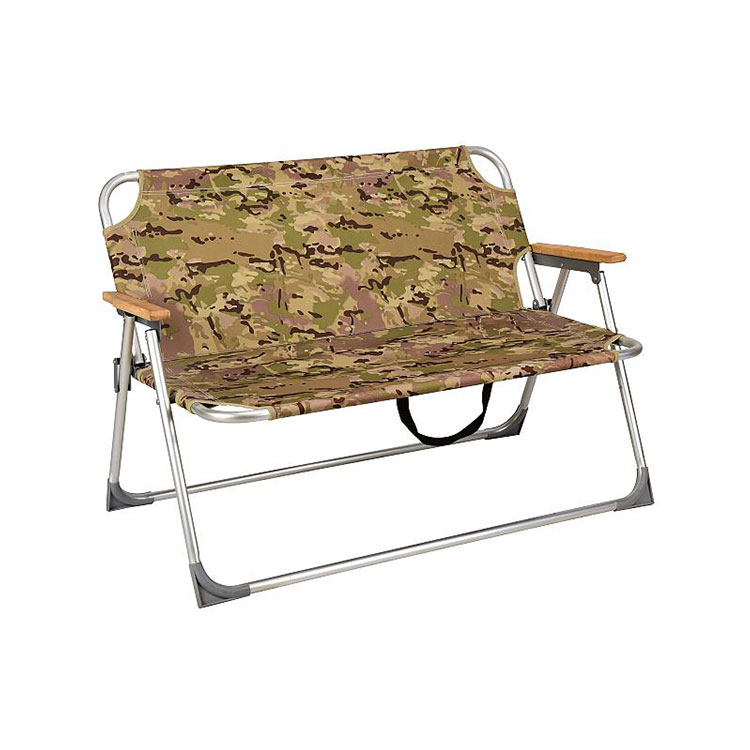
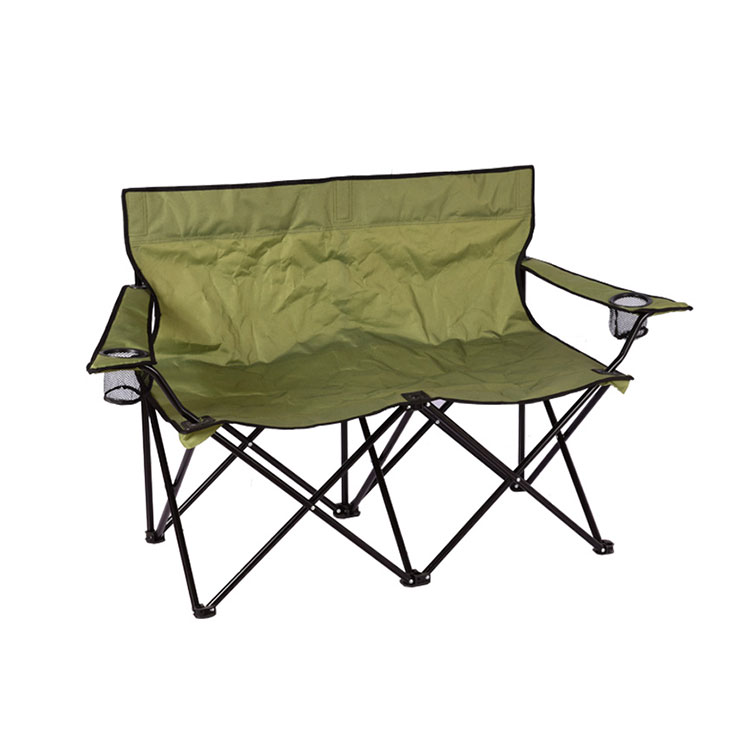
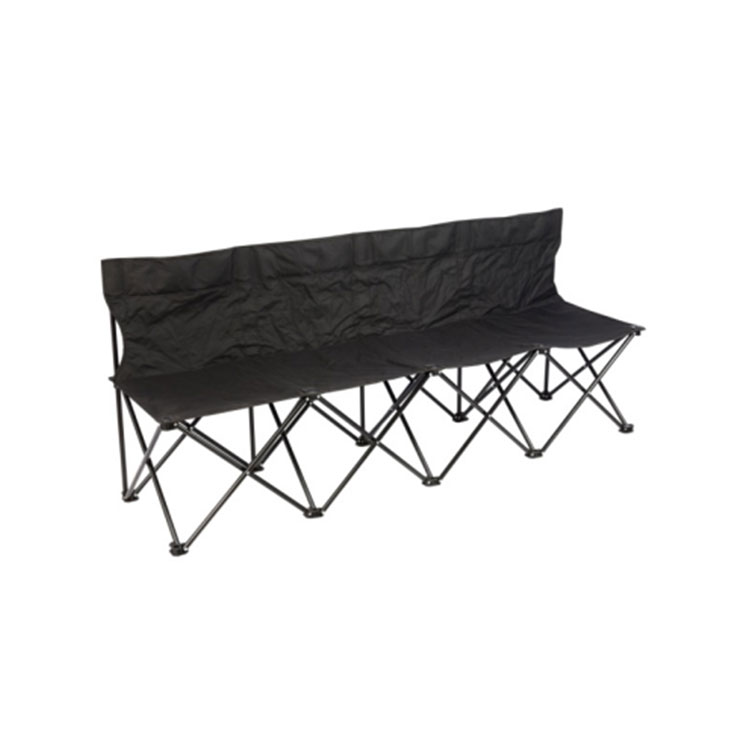
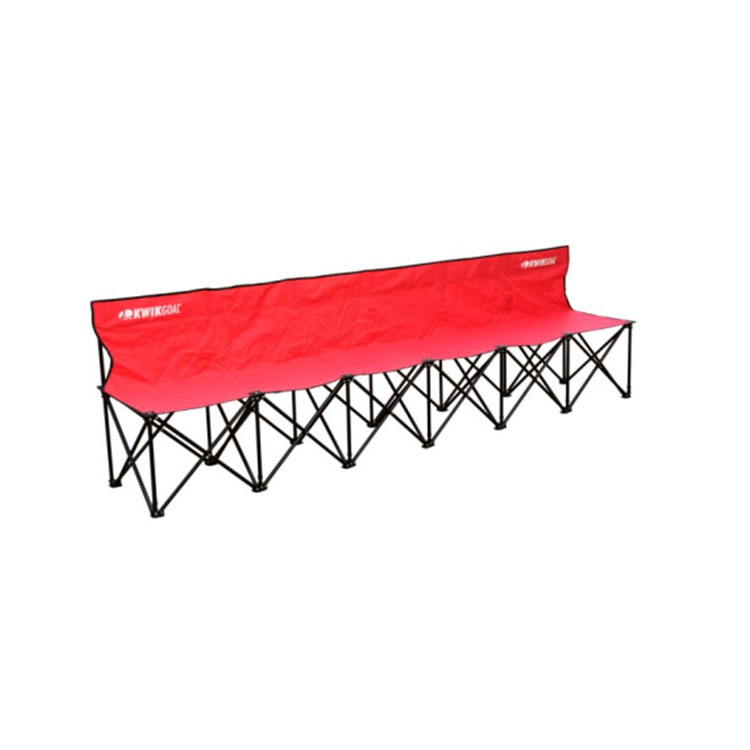
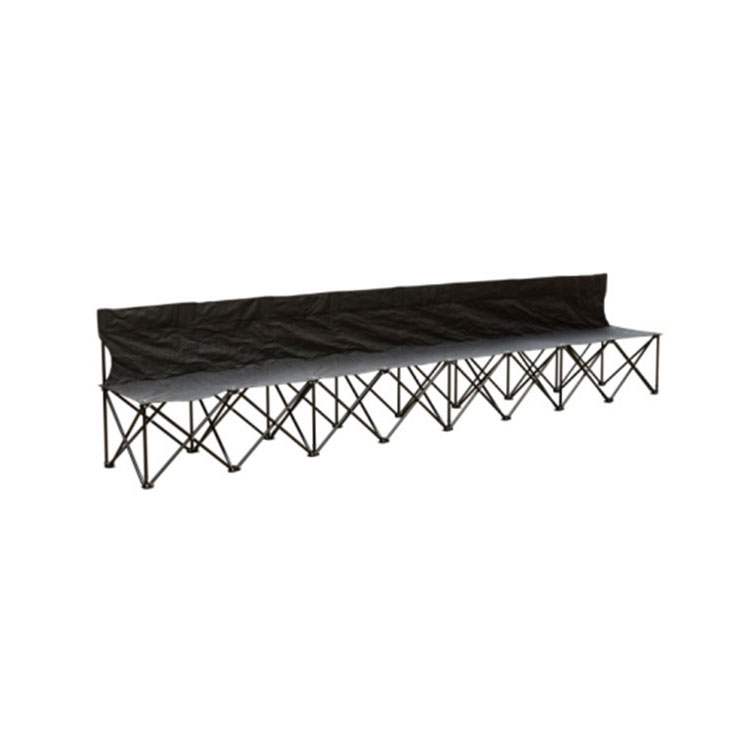
When does a Multi-Seat Camping Chair offer advantages over multiple single chairs?
Scenario one: Group cooking and dining. At a campsite with a designated picnic table, a multi-seat chair placed at the table's end allows three or four people to sit in a row facing the cooking area. This arrangement permits each person to pass plates, utensils, and food items without standing up or reaching across gaps between single chairs. The continuous armrest or shared cup holder rail creates a stable surface for passing items.
Scenario two: Limited tent vestibule space. Tent vestibules and screen rooms have irregular floor dimensions. A multi-seat chair with a bench-style configuration fits against a straight tent wall. Single chairs placed in the same space create gaps between each chair that waste floor area. The multi-seat chair positions occupants closer together, reducing the floor area needed per person from approximately 8 square feet (single chair with clearance) to 5 square feet.
Scenario three: Supervision of children or pets. A caregiver using a multi-seat chair can sit adjacent to a child or a dog without a gap between seats. This proximity allows the caregiver to monitor the child's activities or restrain a pet's leash without leaning sideways. In single chairs placed side by side, the armrests of adjacent chairs create a barrier that requires reaching over or moving around.
Scenario four: Shared heat sources. In cool weather camping, a single campfire or propane heater radiates heat in a directional pattern. Occupants of a multi-seat chair sit within a 30- to 40-inch wide band, so all receive similar heat exposure. Occupants of single chairs arranged in a semicircle may have varied distances from the heat source, requiring repositioning of chairs or the heat source itself.
Can an outdoor folding bench chair be used on uneven ground without modification?
An outdoor folding bench chair with a continuous leg design typically has four or six points of ground contact. On uneven ground, one or two of these contact points may bear no weight while the bench rocks on the remaining points. This condition creates instability for all occupants. Unlike a single chair that can be rotated to find a stable position, a bench chair's longer footprint (typically 45 to 60 inches) makes it more sensitive to ground irregularities. To use a bench chair on uneven ground, place a leveling pad under the elevated contact points. Leveling pads can be flat stones, plywood squares, or commercial camper leveling blocks. A slope exceeding 3 degrees across the length of the bench requires the user to place shims under two or more legs. Without leveling, the bench may tip sideways when an occupant sits on the higher end. Some bench chair models include independently adjustable feet that screw in or out to compensate for ground variation.
What is the typical weight capacity of a three-person outdoor folding bench chair?
Manufacturers list weight capacities for bench chairs in two ways: per-seat capacity and total capacity. Per-seat capacity ranges from 200 to 300 pounds per seating position. Total capacity ranges from 600 to 900 pounds. The total capacity is not the sum of per-seat capacities. A bench chair rated for 250 pounds per seat (750 pounds total) may have a total capacity of 600 pounds because the frame experiences higher stress when all seats are occupied simultaneously. The center seating position places the greatest load on the frame because it has the longest unsupported span between legs. In a typical bench chair with legs at the ends only, the center seat has a span of 24 to 30 inches between support points. The end seats have a span of 12 to 15 inches to the nearest leg. For this reason, users exceeding 200 pounds in body weight should occupy end seats rather than the center seat. Bench chairs with a center leg (six total legs) distribute load more evenly and can support higher total weights.
What factors determine whether a Multi-Seat Chair suits a family of four versus four single chairs?
1. Age range of children. For families with children under age eight, a multi-seat chair keeps children within arm's reach of an adult. A child seated next to an adult cannot wander away without the adult noticing movement through the shared frame. For families with teenagers or adults only, four single chairs provide more personal space.
2. Duration of seated activity. For activities lasting under two hours, such as watching a parade or a youth sports game, a multi-seat chair keeps the family group compact and easier to move as a unit. For activities lasting over two hours, such as an outdoor concert or a day at the beach, single chairs allow each person to adjust their position independently.
3. Storage and transport capacity of the vehicle. A multi-seat chair for four people occupies approximately 3 to 4 cubic feet when folded. Four single chairs occupy approximately 6 to 8 cubic feet because each chair has its own frame, legs, and fabric. A family driving a compact car or an SUV with third-row seating in use may lack space for four single chairs.