


 русский
  Español
  Deutsch
Picking a Folding Camping Chair: What Actually Matters
You have seen them everywhere. Carrying a canvas bag with two straps. You pull it out, unfold it, and suddenly you have a seat. Folding camping chairs have become standard equipment for camping trips, sports events, beach days, and backyard barbecues.
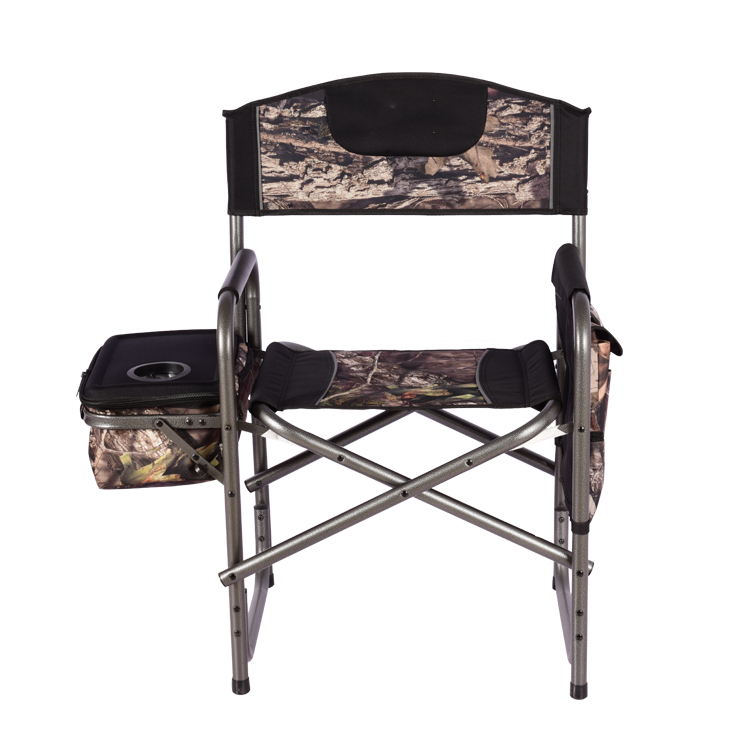
But if you have ever sat in one that felt too low, too flimsy, or just uncomfortable after an hour, you know that not all folding chairs are the same. Let me walk you through what actually matters.
The basic design
Most folding camping chairs use a similar structure: a frame of hollow metal tubes (usually steel or aluminium), a fabric seat and back (usually polyester or nylon), and plastic or metal hinges where the frame folds. The chair folds into a carry bag that is roughly the size of a folded camping chair—about 80–100 cm long and 15–20 cm wide.
The classic "director's chair" style has a low seat (about 30–40 cm from the ground) and a high back. The "quad" or "padded" style is wider, with armrests and a cup holder. There are also compact backpacking chairs (much smaller, lighter, and lower to the ground).
Steel vs. aluminium frames
This is the biggest weight decision. Steel frames are stronger for the same tube diameter, but they are heavier. A steel-framed camping chair typically weighs 3.5 to 5 kg. Aluminium frames weigh 2 to 3 kg. That does not sound like a huge difference, but when you are carrying the chair across a field or packing it into a car boot, every kilogram adds up.
Steel frames also rust eventually. Most are powder-coated or painted, but the coating wears off at the joints and where the fabric rubs. Aluminium does not rust. It can corrode (white powdery spots) in salt air, but it stays functional much longer than steel in wet conditions.
If you camp near the ocean or leave your chair outside overnight, aluminium is a better choice. If you want the lowest possible price and do not mind the weight, steel is fine.
Fabric matters more than you think
The seat and back are usually made of polyester (600D to 1200D) or nylon. Polyester resists UV damage better than nylon. A polyester chair in full sun will last two to three years before the fabric fades or weakens. Nylon will start to break down in 12 to 18 months.
The fabric is also where you feel the quality. Cheap chairs use thin (600D) fabric that stretches under your weight. After an hour, the seat has sagged, and you are sitting on the crossbars. Better chairs use 900D or 1200D polyester with a double-stitched seam. The fabric should feel firm, not floppy.
Look at the corners where the fabric attaches to the frame. These points take the most stress. If the attachment is a simple sleeve that slides over the tube, check that the stitching goes through the webbing, not just the main fabric. Webbing (a thick nylon strap) distributes the load. Fabric alone will tear eventually.
Height matters for comfort
Most folding camping chairs are low—the seat is about 30 to 45 cm from the ground. That is fine for sitting around a campfire or watching a sports game. But if you have knee problems or difficulty standing up from a low seat, you want a "tall" or "high-back" chair with a seat height of 45 to 55 cm. These are harder to find but much easier to get out of.
Also check the seat depth (from the front edge to the back). Some chairs are cut too deep. When you sit back, the front edge of the seat hits the back of your knees, which becomes uncomfortable after 20 minutes. Your feet should rest flat on the ground with a small gap behind your knees.
Cup holders and pockets
Almost every camping chair now has a cup holder. Most are on the right armrest (for right-handed people). Some have a mesh pocket on the arm or on the back of the chair.
Here is the thing: the cup holder is usually a rigid plastic ring or a mesh pocket. The rigid ring holds a can or a bottle securely. The mesh pocket is less stable—a tall water bottle can tip out when you stand up. The pocket on the back is useful for a book or a jacket, but if you lean back, you will feel whatever is in it pressing against your spine.
These features are nice, but do not let them distract you from the basics. A chair with great cup holders but a flimsy frame is still a bad chair.

-
-
 TEL:
TEL:
- +86-13738961469
-
-
-
 EMAIL:
- cnds@cndsgm.com
-
-
-
 ADDRESS:
- Niubei Jincun, Baiyang Sub-district, Wuyi County, Jinhua City, Zhejiang Province, China
-
Outdoor Leisure Products Manufacturer

