


 русский
  Español
  Deutsch
Are Outdoor Leisure Lounge Chairs Safe on Uneven Ground
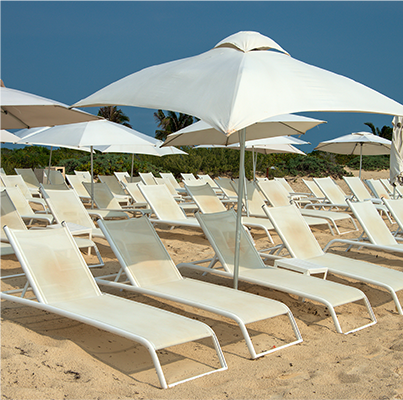
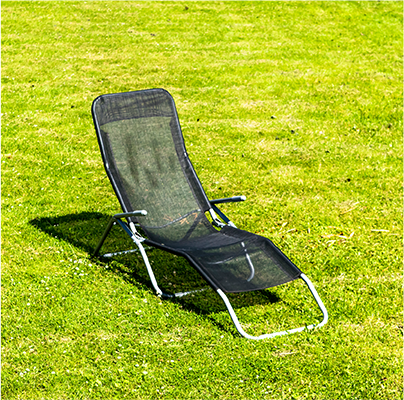
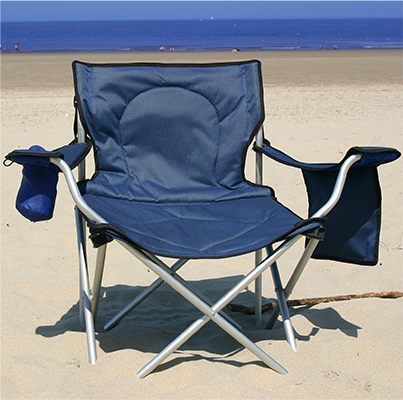
Outdoor relaxation furniture is often designed with comfort in mind, yet real environments rarely offer flat, predictable surfaces. An Outdoor Leisure Lounge Chair may feel secure on a patio, but once moved onto grass, gravel, sand, or sloped terrain, stability behavior changes significantly. Safety concerns usually emerge from subtle shifts in load balance rather than obvious structural failure.
Ground Contact Behavior and Stability Loss
Uneven support points under chair legs
Most lounge chairs rely on four-point contact systems. On level ground, weight is distributed evenly across all legs. Uneven terrain disrupts this balance, leaving one or more legs partially suspended or overloaded.
A small height difference—sometimes only a few millimeters—can shift the entire load path, forcing diagonal stress through the frame.
Soil compression and gradual sinking
Soft ground such as grass or damp soil compresses under pressure. Over time, one leg may sink deeper than others, changing the chair’s geometry mid-use. This slow deformation often goes unnoticed until the user feels a sudden tilt or rocking motion.
Outdoor seating studies highlight that soft or shifting surfaces significantly increase instability risk due to uneven leg penetration and load redistribution .
Frame Design and Safety Influence
Wide base geometry improves resistance
Lounge chairs with broader stance designs reduce the impact of uneven terrain by spreading force across a larger footprint. A wider base increases tolerance for ground irregularities before tipping becomes noticeable.
Recline angle and center of gravity shift
Reclining mechanisms move the user’s center of mass backward. On uneven surfaces, this backward shift amplifies imbalance, especially if rear legs sit on softer or lower ground.
Even minor adjustments in recline position can significantly alter how weight travels through the frame.
Structural stiffness and joint response
Rigid frames resist deformation more effectively than flexible ones. Lightweight tubing, while convenient for transport, can flex slightly under uneven loading, increasing perceived wobble even without visible damage.
Safety Risk Scenarios in Outdoor Use
Side slope environments
Placing a lounge chair on a sloped surface creates continuous lateral force. The chair naturally leans downhill, and the user’s weight reinforces this direction. Over time, this can increase sliding or tipping risk.
Mixed surface transitions
Moving from compact ground to loose sand or gravel introduces sudden resistance changes between legs. One leg may sink or slide faster than others, creating abrupt instability.
Entry and exit motion stress
The highest risk moment often occurs while sitting down or standing up. These actions introduce dynamic force spikes that exceed normal seated load. On uneven ground, this force is not evenly absorbed, increasing the chance of sudden tilt.
Safety guidance for outdoor lounge seating emphasizes stable placement and avoidance of sloped or irregular terrain to reduce accident risk .
Stability Performance Comparison Table
| Feature | Lightweight Leisure Lounge Chair | Reinforced Outdoor Recliner | Stability Impact |
| Frame Thickness | Thin aluminum tubing | Thickened aluminum/steel hybrid | Thicker frame reduces flex |
| Base Width | Narrow stance | Wide stance | Wider base improves balance |
| Foot Design | Small plastic caps | Large anti-sink feet | Larger feet reduce sinking |
| Recline System | Multi-angle folding joints | Limited-angle support frame | Fewer joints improve rigidity |
| Ground Adaptability | Low tolerance | Medium to high tolerance | Reinforced designs adapt better |
| Weight Distribution | Rear-shifted in recline | Balanced support geometry | Balanced frames resist tipping |
Material Behavior on Irregular Terrain
Aluminum flexibility under load
Aluminum frames prioritize portability, but thin-walled tubes can flex slightly when placed on uneven surfaces. This flex is often perceived as wobble rather than actual structural failure.
Fabric tension changes
Seat fabric stretches differently depending on ground angle. Uneven tension causes the user to sit off-center, shifting weight distribution and increasing lateral stress on one side of the frame.
Plastic foot wear patterns
Chair feet often wear unevenly when used on rough terrain. Once one foot becomes shorter due to abrasion or sinking, the chair begins to lean consistently in one direction.
Environmental Factors That Increase Instability
Moist soil conditions
Moisture softens soil structure, reducing load-bearing capacity. Legs sink at different rates depending on ground density, creating instability even on initially flat surfaces.
Gravel and loose stone surfaces
Loose aggregate surfaces shift under pressure. Small stones roll away from chair legs, causing sudden changes in support height.
Grass and organic terrain
Natural ground cover compresses unevenly over time. Repeated use in the same area creates permanent indentations, increasing long-term instability risk.
Common Real-World Observations
Outdoor use patterns consistently show:
- Chairs feel stable on hard flooring but unstable on grass or sand
- Rear legs sink faster during reclining
- Side tilt becomes noticeable during movement or repositioning
- Wobble increases after extended outdoor exposure
- Stability improves significantly on leveled platforms or mats
These behaviors are typical across lightweight leisure seating rather than isolated product defects.
Engineering Improvements That Enhance Safety
Anti-sink foot attachments
Wide rubber or composite foot pads distribute pressure across a larger surface, reducing penetration into soft ground.
Reinforced cross-frame support
Crossbars between legs reduce twisting under uneven load, helping maintain geometry even on irregular terrain.
Lower seating height design
Lower center of gravity reduces leverage effect during tilt, improving overall resistance to tipping on slopes.
Outdoor leisure lounge seating operates at the intersection of comfort and environmental unpredictability. While designs prioritize portability and relaxation, uneven ground introduces forces that these structures must constantly counterbalance.
Safety depends not only on frame strength but also on how effectively the chair adapts to terrain variability. Stable performance emerges when weight distribution, ground contact area, and structural rigidity work together rather than independently.

-
-
 TEL:
TEL:
- +86-13738961469
-
-
-
 EMAIL:
- cnds@cndsgm.com
-
-
-
 ADDRESS:
- Niubei Jincun, Baiyang Sub-district, Wuyi County, Jinhua City, Zhejiang Province, China
-
Outdoor Leisure Products Manufacturer

