


 русский
  Español
  Deutsch
From Picnic Lunches to Afternoon Rest: What Makes a Chair Recline Well
A picnic chair has a simple job during lunch: provide a stable place to sit, keep the body supported, and make it easy to reach food on the table or picnic blanket. The requirements change after the meal. Reading, watching children play, enjoying a view, or taking a short rest can all benefit from a more relaxed posture.
That transition is where a reclining picnic chair becomes more useful than a conventional folding seat. At Dasheng, we look at reclining seating as a combination of posture adjustment, frame stability, fabric support, and portability. The backrest should move through useful positions, while the complete chair still needs to remain practical for carrying to a park, beach, campsite, garden, or outdoor gathering.
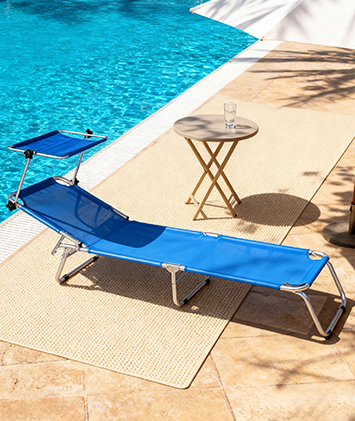
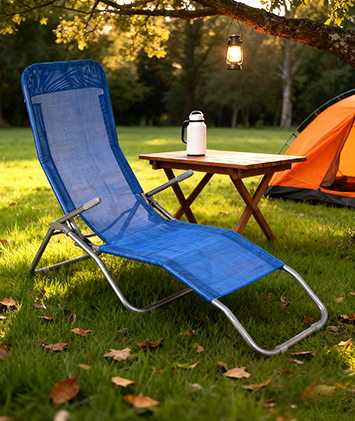
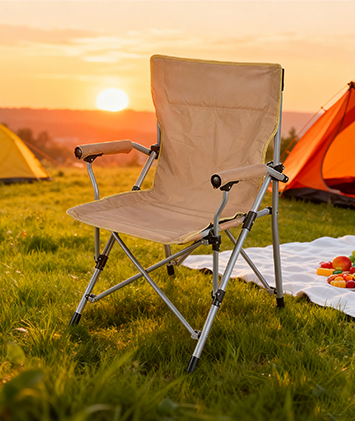
1. Good Reclining Starts With Useful Angles
Adding an adjustable backrest does not automatically make a chair comfortable. The available positions need to correspond with activities people actually perform outdoors.
An upright position can support eating and conversation. A moderate angle can suit reading or relaxed sitting. A deeper recline can provide a more suitable posture for resting.
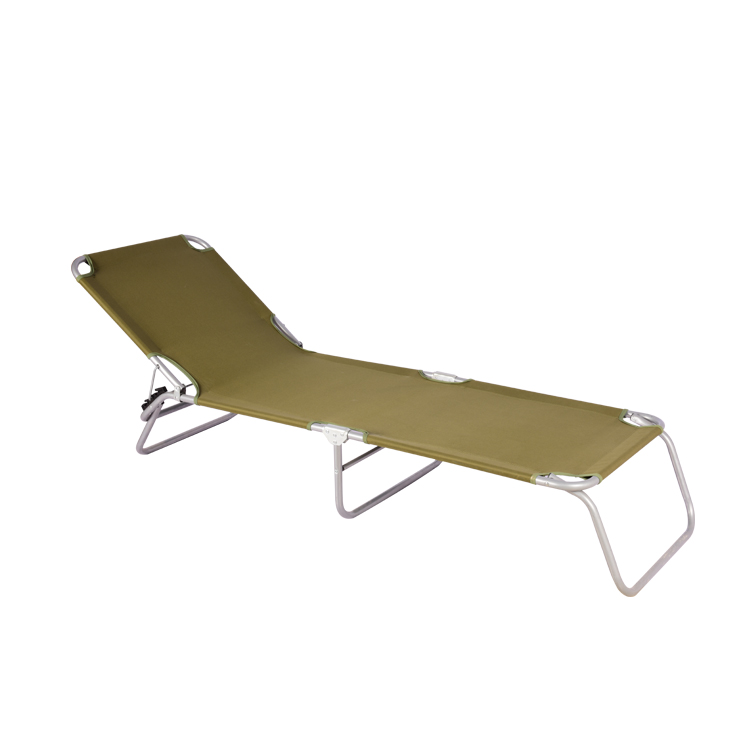
Current outdoor reclining chairs demonstrate several approaches. One folding camping chair uses two backrest positions at 90° and 135°, while another reclining camp chair provides three reclining positions. A separate outdoor lounge design offers four backrest positions together with two footrest positions.
| Recline Position | Potential Outdoor Activity | Structural Focus |
| Near upright | Eating, conversation, card games | Firm back support and stable seating base |
| Moderate recline | Reading, sightseeing, relaxing | Balanced back and lumbar support |
| Deep recline | Resting, listening to music, afternoon break | Back, head, and leg support |
We therefore focus on meaningful adjustment rather than simply increasing the number of positions. Each setting should provide a recognizable change in posture.
2. The Backrest Should Move Without Changing the Chair's Stability
Reclining introduces movement into a structure that normally remains fixed. The side joints, locking points, frame tubes, and backrest connections all need to work together.
Our product development process considers the load path from the backrest into the side frame and down toward the ground. A user leaning backward applies force at a different point from someone sitting upright. The frame needs to accommodate both positions.
Important Reclining Mechanism Details
- Defined adjustment positions rather than uncontrolled movement.
- Secure locking points at each usable angle.
- Side joints positioned to support repeated adjustment.
- Easy-to-operate release or adjustment components.
- Frame geometry that remains balanced after the backrest changes position.
Current products use different solutions, including button-operated mechanisms and side-frame adjustment systems. Some designs require the user to press buttons near the armrests before changing the angle, while others use locking joints.
We see the adjustment mechanism as a structural component rather than a decorative feature. Its operation needs to be intuitive enough for regular outdoor use.
3. Seat and Backrest Need to Work as One Surface
A reclining chair changes the relationship between the seat and backrest. As the backrest moves backward, the body needs continuous support rather than a gap between two separate surfaces.
Fabric tension plays an important role here. A tightly stretched seat can create a firmer sitting experience, while a more flexible textile structure can distribute body pressure across a wider area.
Current reclining camp chairs use materials such as polyester, Oxford fabric, mesh, and padded textile combinations. One current model combines breathable mesh with tear-resistant 600D Oxford fabric, while another reclining camp chair uses a padded polyester seat and armrests.
| Seat Component | Product Role | Design Consideration |
| Seat fabric | Supports the lower body | Strength and tension |
| Backrest fabric | Supports the back | Flexibility and load distribution |
| Mesh section | Improves airflow | Ventilation and durability |
| Padded section | Adds cushioning | Thickness and pressure distribution |
| Reinforced seam | Connects fabric to frame | Stitching and attachment strength |
4. A Picnic Chair Does Not Always Need a Separate Lounge Chair
The value of a reclining structure becomes clearer during a long outdoor session. A conventional folding chair is useful around a picnic table, but a reclining version can change its function after the meal without requiring another piece of furniture.
- Meal position: keep the backrest relatively upright for eating.
- Reading position: move the backrest backward to reduce the upright seating angle.
- Relaxation position: use a deeper recline for a longer rest period.
- Transport position: fold the complete chair after outdoor activities.
This multi-use concept already appears in current reclining camping and picnic-oriented seating. Picnic Time describes a reclining camp chair with three positions and lists camping, picnicking, tailgating, and beach use among its applications.
Our approach at Dasheng is similar: the chair should adapt to the activity while maintaining a compact folding structure.
5. Foot Support Changes the Meaning of Reclining
Back support is only part of a relaxed posture. As the backrest moves farther backward, the lower legs may remain unsupported. A footrest can extend the usable seating surface and make deeper reclining feel more natural.
Some current outdoor reclining designs use removable footrests, while others integrate a retractable extension into the chair. One model provides a 20-inch footrest and a reclining configuration that extends to approximately 60 inches in length.
Removability also has a practical advantage. A picnic chair does not need a long footrest during lunch, yet that same feature can become useful during an afternoon rest.
Two Configurations From One Chair
| Configuration | Typical Use | Space Requirement |
| Chair without footrest | Dining, conversation, short breaks | More compact |
| Chair with footrest | Reading, reclining, extended rest | Longer open footprint |
We consider this type of modularity useful for outdoor furniture because it gives the same product two distinct functions.
6. Armrests Should Remain Comfortable Through Different Angles
Armrests can become more important as the backrest moves. An upright position naturally places the arms close to the body, while a reclined posture changes the relationship between the elbows, shoulders, and seat.
Wide armrests can provide additional support during relaxed sitting. Their height also needs to leave enough space for users to enter and exit the chair without obstruction.
Current reclining camping chair specifications commonly include wide or padded armrests as part of the comfort system.
At Dasheng, we therefore consider the armrest, backrest, and seat as a connected group. Changing the backrest angle can affect all three areas, so each component needs to remain functional across the available positions.
7. Stability Becomes More Important During Deep Reclining
A chair's center of load changes as the user leans backward. The frame needs enough footprint and structural balance to accommodate that movement.
Outdoor ground conditions make this consideration more complicated. Picnic areas can include grass, compact soil, gravel, sand, or slightly uneven surfaces. Some current reclining lounge chairs use U-shaped steel frames together with anti-slip and anti-sink footpads to improve ground contact.
Our design considerations include:
- Leg spacing and footprint.
- Frame tube configuration.
- Joint reinforcement.
- Ground-contact area.
- Stability at different recline positions.
The target is not simply a heavier frame. A well-balanced structure needs to provide support while keeping the chair practical to carry.
8. Seat Height Influences Picnic Table Compatibility
A reclining picnic chair still needs to function as a picnic chair. That means its seat height should be considered alongside the table or dining surface.
A low lounge chair may feel comfortable during relaxation but can become inconvenient around a standard picnic table. A higher seat may provide easier access to food and a more upright dining posture, yet it may not offer the same relaxed feel during deep reclining.
We therefore evaluate seat height together with backrest angle and seat depth rather than specifying these dimensions separately.
| Product Requirement | Relevant Dimension | Potential Effect |
| Outdoor dining | Seat height | Relationship with tabletop |
| Relaxed sitting | Backrest angle | Body posture |
| Longer rest | Seat depth + footrest | Leg support |
| Transport | Folded dimensions | Storage and carrying |
9. Folding Dimensions Cannot Be Ignored
A reclining mechanism, footrest, headrest, and larger seat can increase the size of a chair. That makes folding performance especially important for picnic products.
Current reclining camp chairs illustrate the range of possible configurations. One three-position reclining chair measures approximately 36 × 33 × 42 inches when open and folds to around 37 × 8.5 × 8.5 inches, with a listed weight of 9.7 lb. Another reclining camping model weighs about 8.5 lb and has an upright configuration around 32.5 × 25 × 34.5 inches before extending with its footrest.
These examples show why buyers should examine both open and folded dimensions. A comfortable chair that occupies excessive vehicle or storage space may not fit the intended picnic scenario.
10. Fabric Selection Should Match Outdoor Use
Picnic chairs can encounter grass moisture, spilled drinks, food particles, sunlight, dust, and sand. The fabric therefore needs to balance comfort with practical outdoor performance.
Oxford fabric can provide a relatively structured seating surface, while mesh can increase airflow around the back and seat. Padded polyester can add softness for longer sessions. Current products use these combinations according to their intended use.
At Dasheng, we can work with different fabric configurations according to product positioning and customer requirements. Material selection can cover the seat, backrest, side panels, pockets, headrests, and footrests rather than using one textile specification throughout the chair.
11. Small Features Can Make a Reclining Picnic Chair More Practical
Reclining functionality creates the main difference, but supporting details can determine how useful the chair becomes during a full outdoor session.
- Cup holder: keeps drinks accessible without requiring a separate side table.
- Storage pocket: provides space for phones, keys, books, or snacks.
- Headrest: adds support during a deeper recline.
- Carry bag: makes transportation easier after folding.
- Detachable footrest: converts standard seating into a longer lounge configuration.
These features already appear across current reclining outdoor seating, including portable camp chairs with cup holders, storage pockets, padded headrests, and removable footrests.
12. What We Consider During Product Development
At Dasheng, our folding leisure chair and outdoor seating range includes camp chairs, beach chairs, lounge chairs, folding leisure chairs, and related products. We also provide customized outdoor leisure chair solutions based on customer requirements.
For a reclining picnic model, our product review can cover:
- Number of backrest positions.
- Actual recline angles.
- Seat height, width, and depth.
- Backrest height and support area.
- Armrest dimensions.
- Footrest configuration.
- Frame material and tube specification.
- Fabric construction.
- Open and folded dimensions.
- Product weight and packaging requirements.
This combination gives buyers a clearer specification framework for private-label, OEM, and customized outdoor seating projects.
A Reclining Picnic Chair Needs to Work Before and After the Meal
The value of a reclining picnic chair comes from its ability to change with the activity. Upright seating can support lunch and conversation, moderate reclining can create a comfortable reading position, and a deeper angle can provide a more relaxed afternoon setup. A footrest can extend that transition further by supporting the legs.
At Dasheng, we approach this product as a complete folding seating system. Backrest adjustment, seat geometry, fabric tension, armrest position, frame stability, foot support, and folded dimensions all influence how the chair performs outdoors. Current market products demonstrate that two-position, three-position, and four-position reclining configurations can all be combined with portable frames and outdoor-oriented materials.
For buyers developing a reclining picnic chair, the key product question is not simply how far the backrest can move. The more useful consideration is whether every position has a practical purpose and whether the chair remains stable, comfortable, and portable throughout the transition from picnic lunch to afternoon rest.

-
-
 TEL:
TEL:
- +86-13738961469
-
-
-
 EMAIL:
- cnds@cndsgm.com
-
-
-
 ADDRESS:
- Niubei Jincun, Baiyang Sub-district, Wuyi County, Jinhua City, Zhejiang Province, China
-
Outdoor Leisure Products Manufacturer

