


 русский
  Español
  Deutsch
2025 Outdoor Leisure Chair Trends: The Dual Pursuit of Natural Aesthetics and Pragmatism
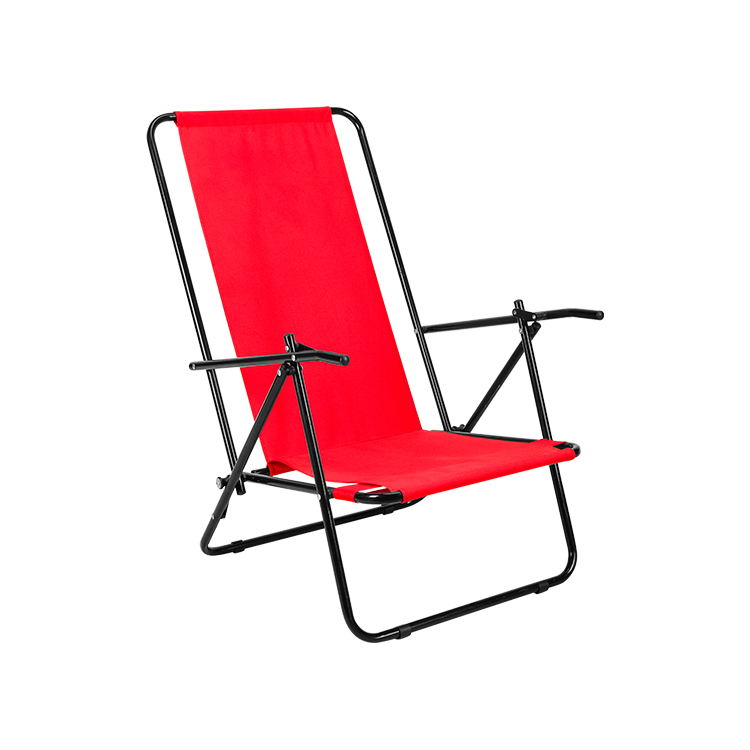
Are Lightweight Outdoor Chairs More Convenient to Use?
Lightweight outdoor chairs offer measurable convenience advantages over standard-weight chairs, but these advantages come with trade-offs. Convenience is defined here as the ease of transporting, setting up, and repositioning the chair during outdoor activities. A lightweight chair typically weighs 2 to 5 pounds, compared to 8 to 12 pounds for a standard outdoor chair. This weight difference of 6 to 7 pounds represents a 50 to 75 percent reduction in mass. For a user walking 0.25 miles (1,320 feet) from a parking area to a beach or campsite, carrying a 3-pound chair requires 3,960 foot-pounds of work (force multiplied by distance). A 10-pound chair requires 13,200 foot-pounds of work. The lightweight chair therefore reduces the physical energy expenditure for transport by approximately 70 percent.
The folded volume of a lightweight chair is also smaller. A lightweight chair compresses to 1.5 to 2.5 cubic feet, while a standard chair occupies 3 to 5 cubic feet. This smaller volume allows the lightweight chair to fit into a backpack, a bicycle pannier, or a small car trunk alongside other gear. For users traveling by public transportation to an outdoor venue, a lightweight chair can be carried in one hand while holding a ticket or phone in the other. The reduced bulk also makes the chair easier to store in an apartment closet or under a bed.
However, convenience is not solely determined by weight and volume. The setup time for a lightweight chair is similar to that of a standard chair, typically 5 to 15 seconds for a scissor-fold design. Some ultra-lightweight chairs use a collapsible pole frame similar to a tent, requiring 30 to 60 seconds to assemble. For a user making multiple stops in a single day—for example, moving from a morning fishing spot to an afternoon picnic area—the longer assembly time of a pole-frame chair reduces convenience. Additionally, lightweight chairs often lack features that add convenience during use, such as cup holders, side pockets, or attached carrying straps. A standard chair with a built-in cup holder allows the user to keep a beverage within reach without bending to the ground.
Are Lightweight Outdoor Chairs Durable?
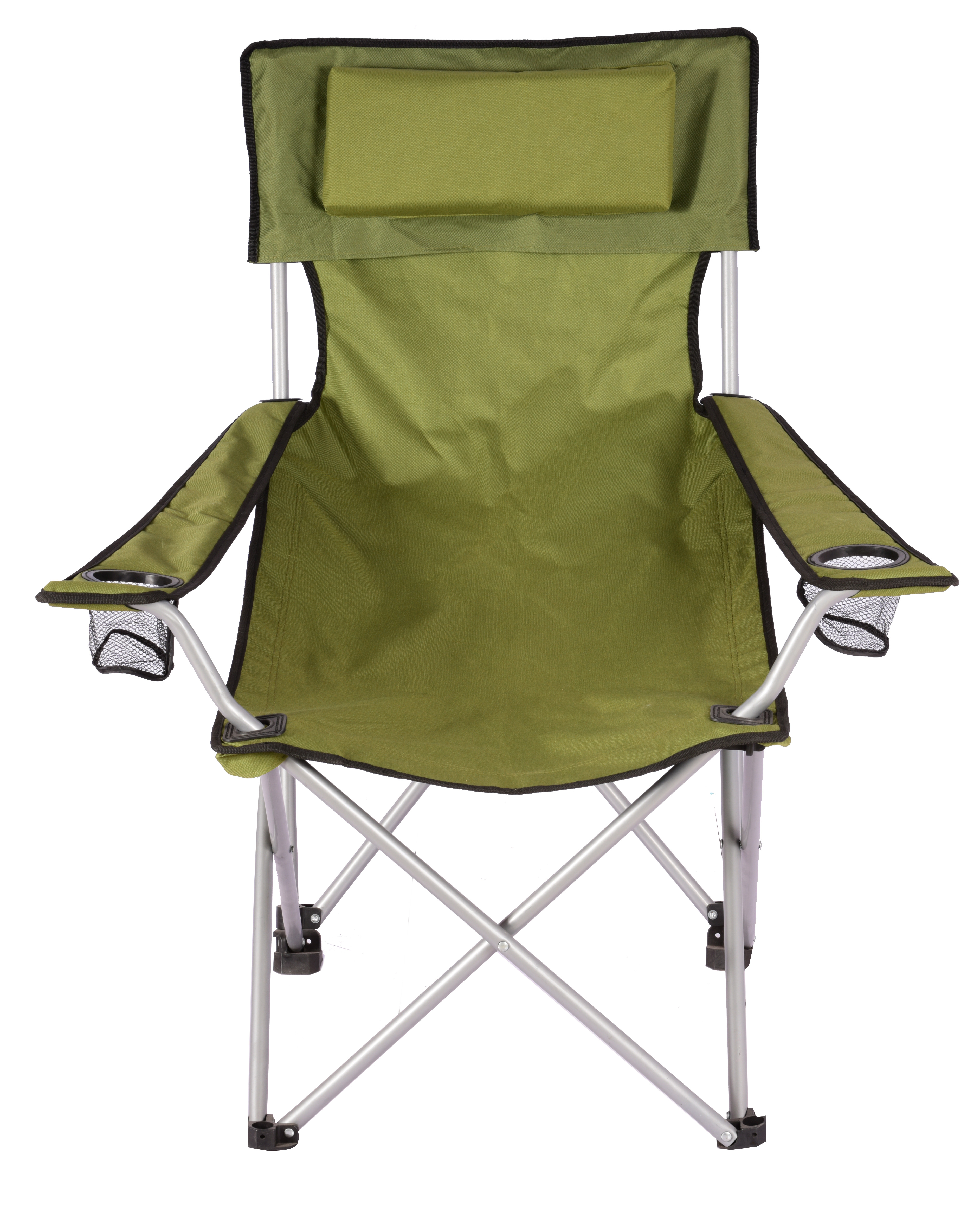
The durability of a lightweight outdoor chair is generally lower than that of a standard-weight chair due to the material reductions required to achieve lower mass. Durability is defined here as the number of use cycles or seasons before a component fails, requiring repair or replacement. The primary durability differences are observed in three components: the frame tubing, the fabric, and the hinge joints.
Frame tubing. A standard outdoor chair uses aluminum tubing with an outer diameter of 0.875 to 1 inch and a wall thickness of 0.049 to 0.065 inches. A lightweight chair uses tubing of 0.625 to 0.75 inches outer diameter with a wall thickness of 0.035 to 0.049 inches. The cross-sectional area of the lightweight tubing is 35 to 50 percent smaller than that of the standard tubing. Under load, the lightweight tubing deflects (bends) more than the standard tubing. A deflection of 1 to 2 inches at the backrest top is typical for a lightweight chair under a 200-pound load. This deflection does not indicate imminent failure, but repeated flexing work-hardens the aluminum, making it more brittle over time. After 500 to 1,000 cycles of sitting and standing, the tubing may develop stress cracks near the rivet holes. A standard chair with thicker tubing may last 2,000 to 3,000 cycles before similar cracking occurs.
Fabric. The fabric on a lightweight chair is typically lighter in weight per square yard (ounces per square yard, or OSY). A standard chair uses fabric of 8 to 12 OSY. A lightweight chair uses fabric of 4 to 6 OSY. The lighter fabric has lower tear strength and lower abrasion resistance. A fabric weight of 4 OSY tears at 80 to 120 pounds of force, while an 8 OSY fabric tears at 160 to 240 pounds of force. The lightweight fabric also degrades faster under UV exposure. After 200 hours of sunlight exposure, a 4 OSY polyester fabric loses 25 to 35 percent of its tensile strength. An 8 OSY fabric loses 15 to 20 percent under the same exposure.
Which Folding Outdoor Chairs are More Comfortable?
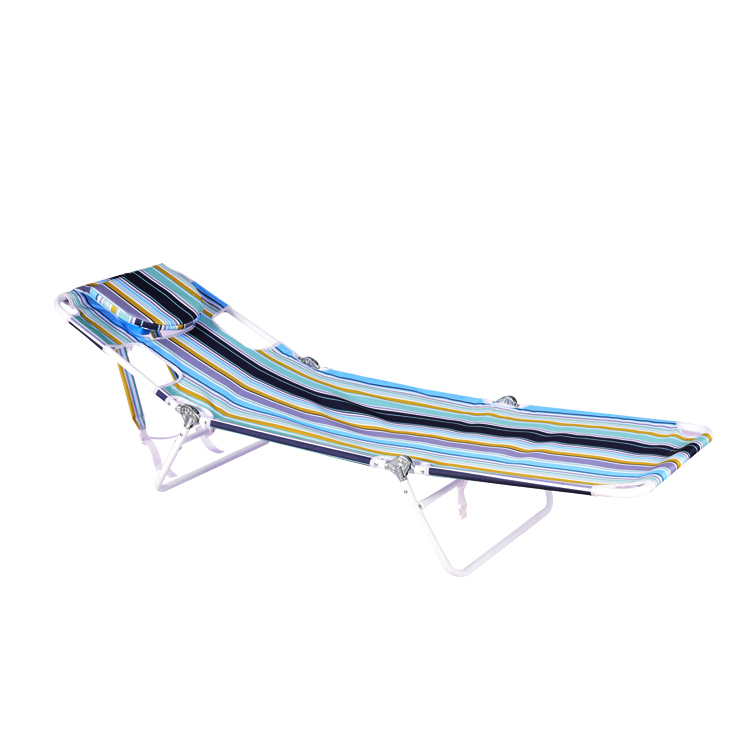
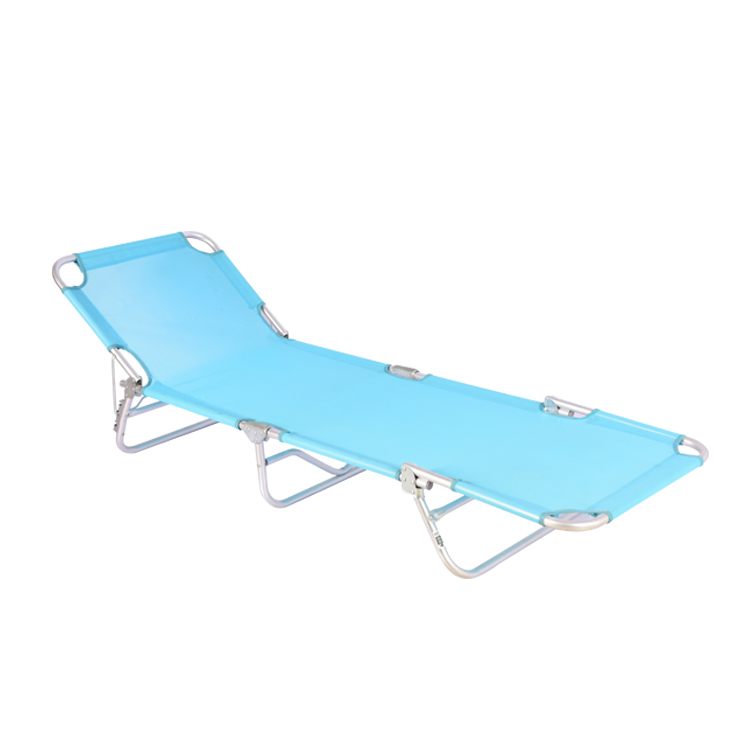
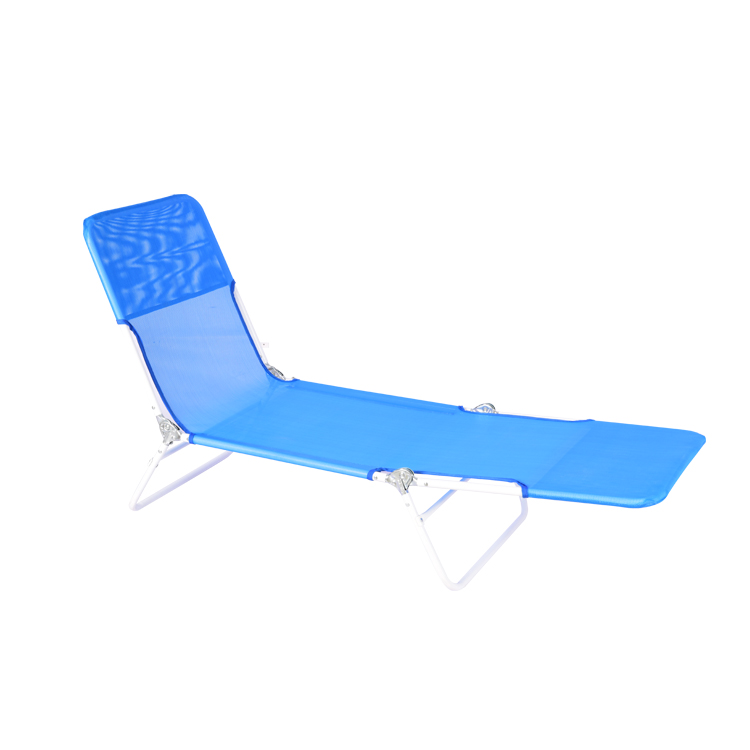
Comfort in folding outdoor chairs is determined by seat height, backrest angle, seat depth, and armrest presence. The table below compares four common types of folding outdoor chairs across these comfort dimensions. The data represent typical measurements for mid-priced products.
|
Chair Type |
Seat Height (inches) |
Backrest Angle (degrees) |
Seat Depth (inches) |
Armrest Presence |
Typical Comfort Duration (minutes) |
|
Low-profile beach chair |
6–8 |
100–120 (reclined) |
16–18 |
None or low (4–6 inches above seat) |
30–60 |
|
Standard folding camp chair |
14–17 |
95–105 (upright) |
18–20 |
Yes, padded (7–9 inches above seat) |
60–120 |
|
Director's chair |
17–19 |
95–100 (upright) |
15–17 |
Yes, wood or metal (8–10 inches above seat) |
90–150 |
|
Padded chaise lounge |
8–12 |
0–180 (adjustable) |
50–65 (includes footrest) |
Yes, padded full-length |
120–240 |
Are Folding Outdoor Chairs Suitable for Camping or Hiking?
The suitability of folding outdoor chairs for camping versus hiking differs because the two activities have different distance, weight, and duration requirements. Camping typically involves carrying gear from a vehicle to a campsite over distances of 50 to 500 yards. Hiking involves carrying gear over distances of 2 to 20 miles on trails. These different distances change the acceptable weight and volume of a chair.
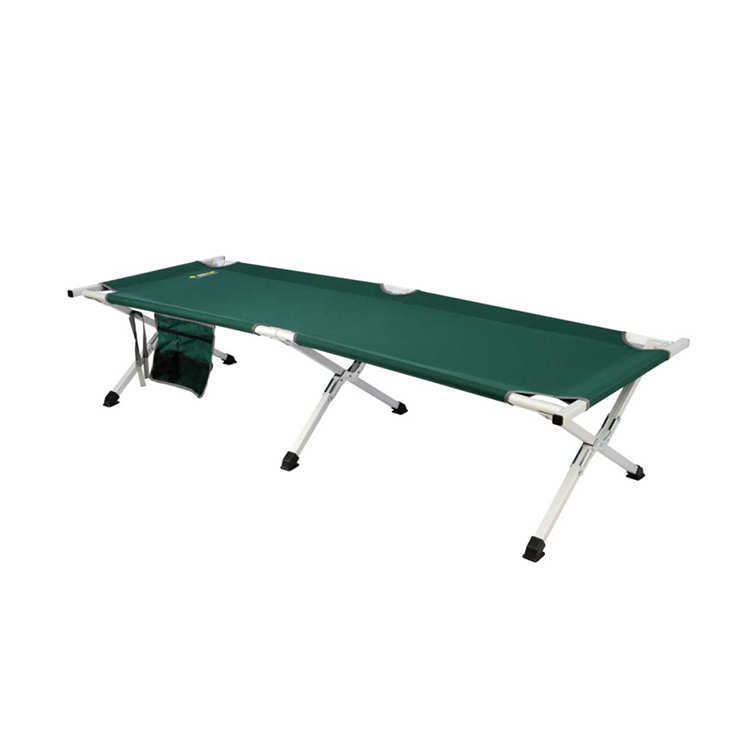
For camping. Folding outdoor chairs are highly suitable for camping. The typical distance from a vehicle to a campsite is under 500 yards, which a person can cover in 5 to 10 minutes. A standard folding camp chair weighing 8 to 10 pounds is acceptable for this distance. The chair provides a comfortable seat for cooking, eating, and socializing around a campfire. The chair's folded size of 24 by 8 by 8 inches fits in a car trunk or on a truck bed alongside coolers, tents, and sleeping bags. Many campers bring one chair per person, with chairs set up at the campsite and left in place for the duration of the stay. The durability of a standard folding chair (five to seven seasons of camping use) matches the expected frequency of camping trips for families (two to four trips per year). For backpacking-style camping where the camper walks 1 to 3 miles from the vehicle to the campsite, a lightweight chair of 2 to 4 pounds is more suitable. This weight allows the chair to be carried in a backpack without exceeding a reasonable total pack weight of 25 to 35 pounds.
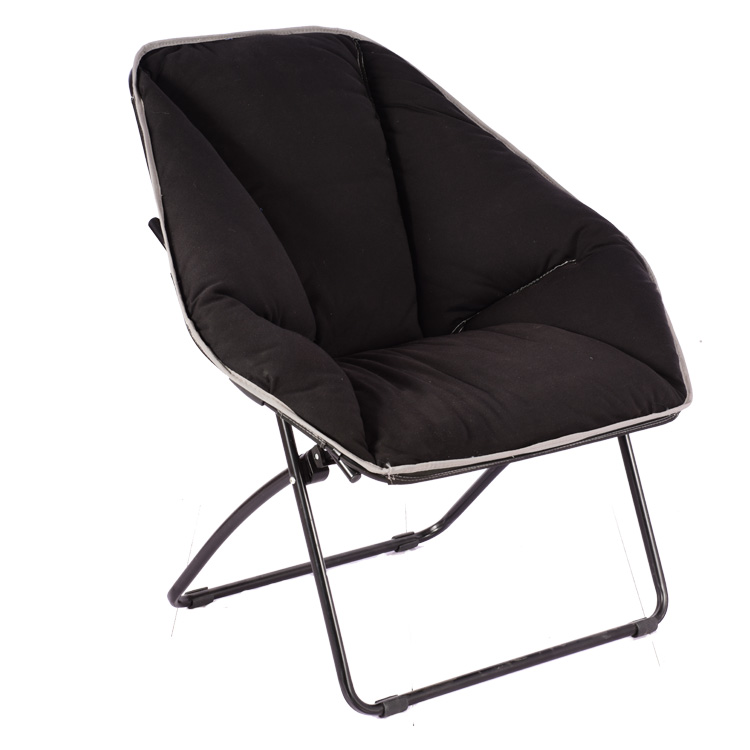
For hiking. Folding outdoor chairs are suitable only for short hikes or for hikers who prioritize comfort over weight. A day hike of 5 to 10 miles with an elevation gain of 1,000 to 2,000 feet requires a backpack weight of 10 to 15 pounds for water, food, and layers. Adding a 2-pound chair increases pack weight by 13 to 20 percent. Adding a 5-pound chair increases pack weight by 33 to 50 percent. For a hiker who covers 2 to 3 miles per hour, a chair used for a 15-minute rest break every 2 hours provides 45 minutes of sitting across a 6-hour hike. The hiker carries the chair for 5 hours and 15 minutes to obtain 45 minutes of sitting. This ratio of carrying time to sitting time (7:1) causes many hikers to leave the chair at home and instead sit on rocks, logs, or the ground.

-
-
 TEL:
TEL:
- +86-13738961469
-
-
-
 EMAIL:
- cnds@cndsgm.com
-
-
-
 ADDRESS:
- Niubei Jincun, Baiyang Sub-district, Wuyi County, Jinhua City, Zhejiang Province, China
-
Outdoor Leisure Products Manufacturer

